
Stabilize Disturbed Ground After Heavy Work
Construction Site Seeding in Douglas for bare soil left by grading, excavation, or infrastructure work
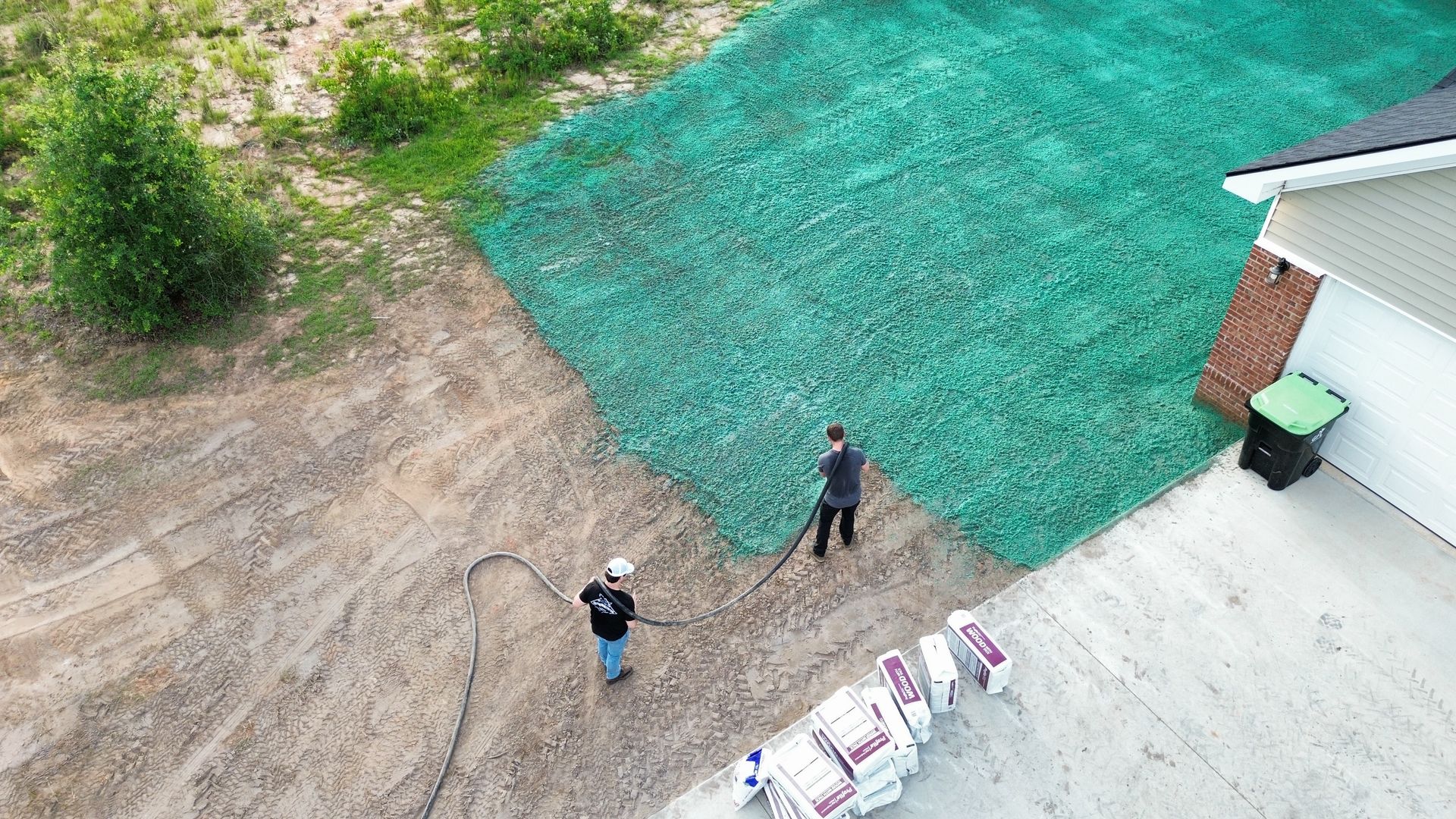
Bare soil left behind after construction invites erosion, sediment runoff, and costly delays in site completion. SNAP Hydroseeding applies construction site seeding in Douglas to stabilize disturbed ground quickly, using a pressurized slurry that binds seed, mulch, and tackifier directly to exposed slopes, graded pads, and cleared areas. Once applied, the mulch layer holds soil in place during rain events while grass germination begins, reducing the need for silt fencing repairs and stormwater compliance issues.
This process works by coating soil with a protective layer that absorbs water, anchors seed in place, and breaks the impact of rainfall before it dislodges loose particles. Builders and developers use hydroseeding to meet erosion control requirements, improve site appearance for inspections or sales, and prepare disturbed ground for permanent landscaping or turf installation. The application covers large areas faster than traditional seeding methods and adapts to uneven terrain where rolled erosion mats struggle to conform.
Schedule project planning to coordinate seeding with your construction timeline and site conditions.
What Proper Site Seeding Requires
Effective construction site seeding begins with evaluating soil compaction, slope angles, and drainage patterns to determine the appropriate seed blend and mulch thickness. Steep slopes receive heavier mulch coverage and tackifier concentrations to resist washout, while flatter areas use lighter applications that still provide erosion protection without impeding grass emergence. Seed selection depends on whether the site will become permanent turf, temporary cover for winter, or transitional vegetation before final landscaping.
After application dries, you'll notice a green or tan fiber blanket covering the soil, with visible grass shoots appearing within seven to fourteen days under adequate moisture. The mulch layer prevents crusting and keeps seeds from washing into low spots or off-site drainage paths. Within a month, grass coverage reduces dust, improves traction on access roads, and gives the property a finished appearance that satisfies inspectors and buyers.
Site seeding does not replace final landscaping or turf installation, but it stabilizes soil during the gap between heavy work and permanent improvements. It also reduces maintenance costs by preventing ruts, gullies, and sediment deposits that require regrading or additional fill material.
Questions Before Starting Your Project
Contractors and site managers often ask about timing, coverage, and compliance with local erosion control standards before scheduling construction site seeding.
How soon after grading should seeding occur?
Seeding works best within days of final grading, before rain compacts bare soil or creates erosion channels that require repair.
What seed types work for temporary versus permanent coverage?
Annual ryegrass establishes quickly for short-term erosion control, while perennial blends support long-term ground cover if the site will remain undeveloped.
Does hydroseeding meet stormwater permit requirements in Douglas?
Hydroseeding satisfies many erosion and sediment control plans when applied at the correct rate and documented with application records and photos.
How much rain can the site handle immediately after seeding?
Light rain helps activate germination, but heavy downpours within the first 24 hours can displace slurry on steep slopes before tackifier fully cures.
What areas of the site should receive priority coverage?
Slopes above drainage structures, embankments near property lines, and areas visible from roads benefit most from early seeding to prevent complaints and regulatory issues.
SNAP Hydroseeding coordinates with builders and developers to apply construction site seeding when soil conditions allow maximum adhesion and germination. Arrange a site assessment to review grading status, drainage concerns, and project deadlines before scheduling your seeding application.