
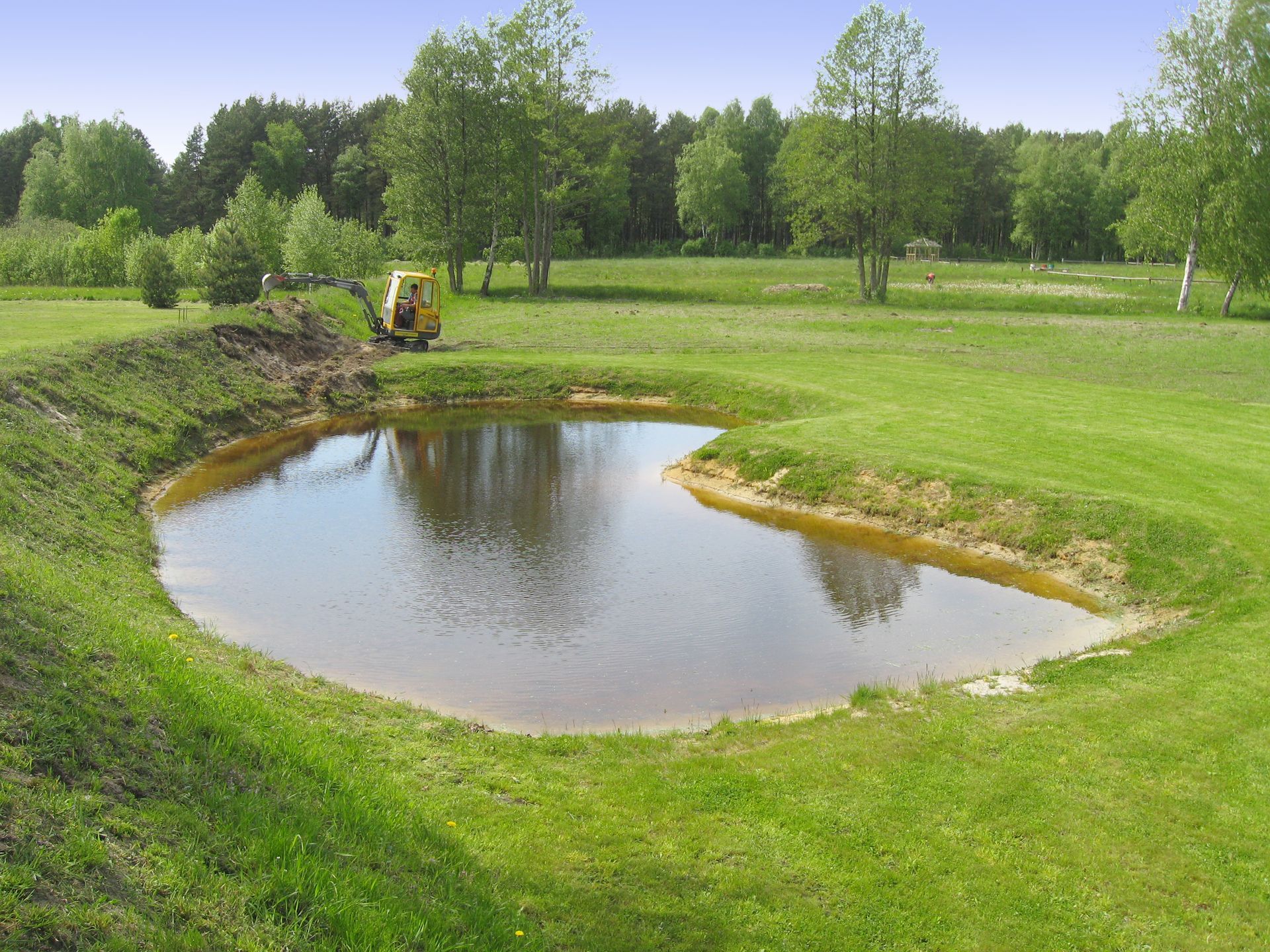
Shorelines That Resist Runoff and Collapse
Pond Erosion Control Seeding in Douglas for exposed banks losing soil to wave action and storm runoff
Pond banks without vegetative cover erode continuously, shedding soil into the water with every rain event and creating expanding bare zones that eventually undermine adjacent land. Hydroseeding stabilizes these areas by applying a seed and mulch mixture that adheres to slopes too steep for traditional seeding methods, establishing root systems that bind soil particles and reduce the velocity of runoff entering the pond. SNAP Hydroseeding customizes erosion control plans for residential ponds, farm stock tanks, and commercial retention basins in Douglas, addressing both aesthetic concerns and functional problems caused by sediment accumulation and shoreline retreat.
Pond erosion control seeding works by covering bare slopes with a fiber mulch that absorbs wave energy, slows water flow, and prevents soil crusting that inhibits grass germination. Seed blends include deep-rooted species that tolerate periodic inundation and establish dense coverage capable of surviving mowing, livestock access, or foot traffic near the water's edge. The hydroseeding process reaches difficult angles and transitions between waterline and upland areas without requiring manual hand-seeding or erosion mat installation.
Schedule a pond erosion assessment to evaluate slope stability, sediment buildup, and vegetation needs around your water feature.
What Changes After Vegetation Establishes
Effective pond bank stabilization requires assessing slope gradient, soil composition, and water level fluctuations before selecting seed types and mulch density. Slopes steeper than 3:1 receive increased tackifier to prevent slurry washoff before germination, while areas subject to periodic flooding use seed blends that tolerate submersion and recover quickly after water recedes. Hydroseeding also applies to the transition zone above normal water levels, where erosion gullies form during heavy rainfall and channel sediment directly into the pond.
Once vegetation matures, property owners notice clearer water with less suspended sediment, stabilized shorelines that no longer calve soil into the pond during storms, and reduced maintenance costs associated with dredging or repairing collapsed banks. Grass coverage also improves the pond's appearance, creates habitat for beneficial insects and amphibians, and reduces algae growth by filtering nutrient-laden runoff before it enters the water.
Erosion control seeding does not address structural failures like severe undercutting or collapsing dam faces, which require grading or engineering solutions before vegetation can stabilize soil. It also works best when applied to freshly graded slopes rather than heavily eroded banks with active gullies.
What Property Owners Usually Ask
Owners of residential ponds, farms, and commercial properties typically want to know about slope limitations, maintenance after seeding, and how hydroseeding compares to other erosion control methods.
What slope angles can hydroseeding stabilize around ponds?
Hydroseeding adheres to slopes up to 2:1 with proper tackifier application, though slopes steeper than 3:1 may require erosion matting or grading before seeding for long-term stability.
How does vegetation prevent sediment from entering the pond?
Grass roots create a network that holds soil in place, while aboveground growth slows runoff velocity and filters suspended particles before water reaches the pond surface.
When should pond banks be seeded in Douglas?
Fall seeding between September and November allows grass to establish before winter, while spring seeding in March or April works if irrigation or consistent rainfall can support germination.
Does hydroseeding work on banks with fluctuating water levels?
Seed blends can include species tolerant of periodic flooding, but areas submerged for weeks at a time require specialized wetland grasses rather than standard turf varieties.
What maintenance does erosion control seeding require after application?
Newly seeded banks need protection from foot traffic and livestock for six weeks, followed by periodic mowing to maintain dense coverage and prevent woody vegetation from establishing.
SNAP Hydroseeding evaluates pond bank conditions, slope stability, and water level patterns to design erosion control seeding plans that protect shorelines and reduce sediment loss. Arrange a site visit to assess your pond's specific erosion concerns and review seeding options tailored to your property.